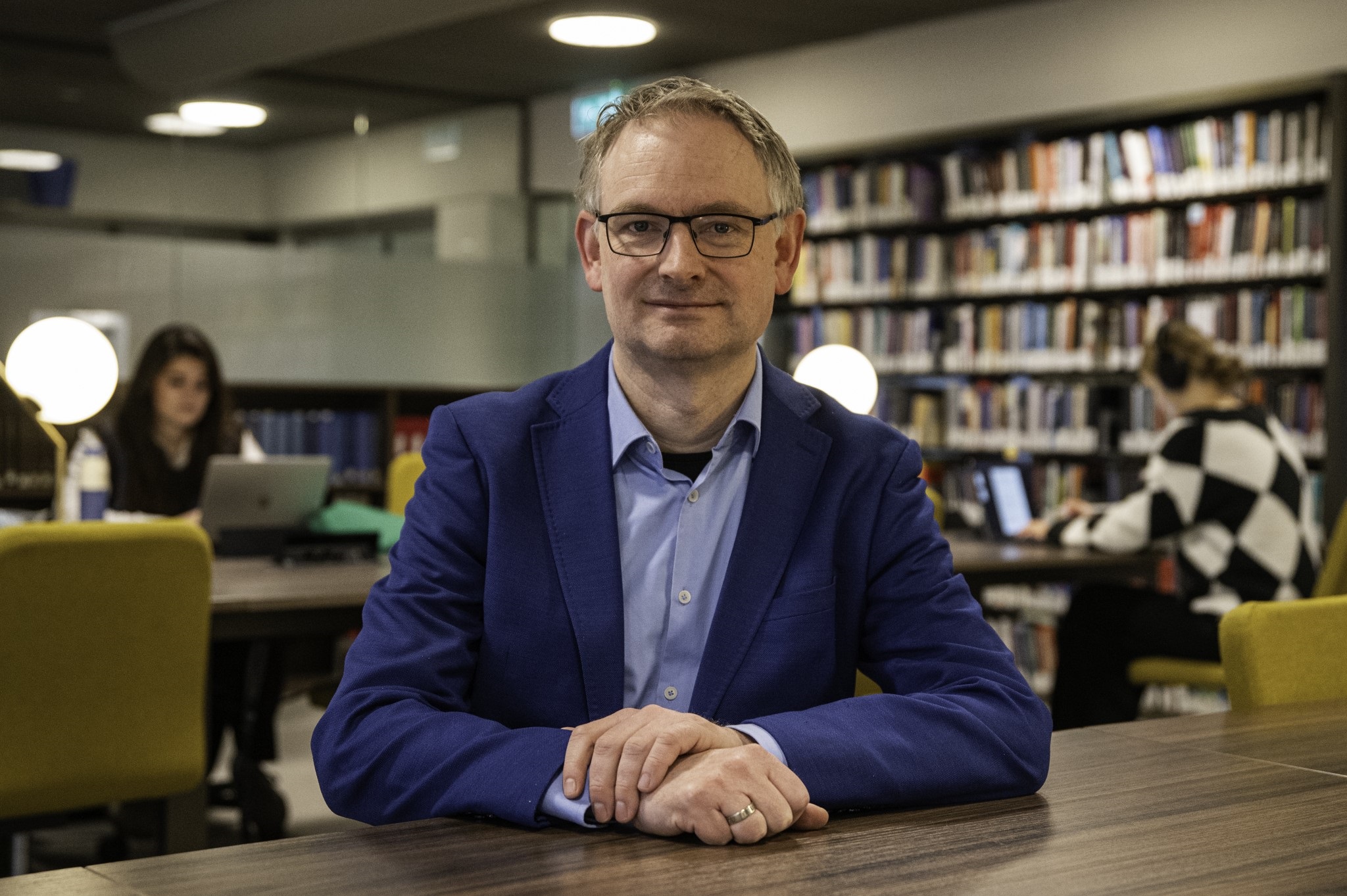
I am Professor of Political Behaviour and Research Methods at Leiden University, the Netherlands. My main areas of interest include parliametary politics, political behaviour, political representation, elections, polls and voting advice applications.
Career
I studied political science at Leiden University, obtaining my Master’s degree (cum laude) in 2006 and my PhD in 2011. Part of my PhD research was completed at the University of Nottingham, where I was a guest PhD researcher in 2008. My PhD thesis, written under supervision of Prof. Rudy Andeweg and Dr Huib Pellikaan, deals with the the democratic mandate of political parties in Great Britain and the Netherlands. This dissertation was shortlisted for the ECPR Jean Blondel Prize.
After I completed my dissertation, I worked as a postdoctoral researcher in the Political Legitimacy research profile area at Leiden, a multidisciplinary project involving history, law, political science and public administration. In addition, I taught at the Institute of Political Science.
From September 2013 to December 2015 I held the position of Assistant Professor in Political Science at Trinity College Dublin, Ireland. My responsibilities included teaching courses in research methods and statistics as well as comparative politics. I was Director of the M.Sc. in Politics & Public Policy in 2014-2015. In January 2016 I took up the position of Assistant Professor of Political Science at Leiden University. In 2019 I was promoted to Associate Professor in the Department of Political Science at Leiden University.
Current position
In 2026 I was appointed Professor of Political Behaviour and Research Methods at Leiden University. I teach comparative politics, Dutch politics, research methods and statistics. In addition to my regular academic work (research and teaching), I am Director of Research at the Institute of Political Science. As a member of the Institute Board, I am responsible for policy regarding all matters relating to research conducted at our Institute.
Professional service and outreach
Next to my position on the Board of the Institute of Political Science, I am involved in the university profile theme ‘Trust in polarized times’. Outside the university, I am a member of the Central Electoral Committee of the Municipality of The Hague.
My outreach activities include the polling aggregation project ‘Peilingwijzer’ in the Netherlands, published by the public broadcaster NOS. I founded a similar ‘Irish Polling Indicator’ project in Ireland, which now continues under the excellent stewardship of Stefan Müller. I am a co-founder and co-editor of the Dutch political science weblog Stuk Rood Vlees.
Between 2015 and 2021, I was a member and later chair of the steering committee of the Standing Group on Parliaments, one of the largest and most active specialist groups within the European Consortium for Political Research (ECPR). In 2017 and 2018, I co-organized the Dutch Flemish Political Science conference Politicologenetmaal with Hans Vollaard, Corinna Jentzsch and Nicolas Blarel in Leiden. In 2019, I co-organized the Standing Group on Parliaments Conference in Leiden with Rudy Andeweg, Tim Mickler and Cynthia van Vonno.
From 2019 to 2023, I was a member of the Young Academy Leiden, an interdisciplinary group of young academics at Leiden University. I acted as its inaugural chair from January 2019 to August 2020. From 2020 to 2026, I was a board member of the Centre for Dutch Politics and Public Administration (CNPB).
Honours and grants
In September 2015 I received the Emerging Scholars Award from the Organized Section on Political Organizations and Parties of the American Political Science Association. I was selected as a member of Young Academy Leiden in 2019.
I received financial support for my work by the Netherlands Organisation for Scientific Research (NWO). In 2018, together with Prof. Thomas Zittel and Prof. Rosie Campbell, I obtained a grant in the Open Research Area (ORA) for your project “The Nature of Political Representation in Times of Dealignment”, which concluded in 2022. In 2019, I was awarded an NWO Vidi grant for my research project “Who opposes? Explaining government-opposition cooperation in parliament and its consequences for democratic legitimacy”.